Thursday, April 19, 2012

GREAT FEMALE PERFORMANCES

What does it mean to give a memorable performance? Is it the one that gets people talking at the water cooler on Monday morning? Is it the one that wins the Academy Award every year? Or does it mean that the actor was good at making us laugh and cry and feel all sorts of emotions that we didn’t even know we had? Some actresses have spent their careers playing women of all types; strong and weak, bitter and happy, old and young, rich and poor, ones that prospered and ones that failed. Each performance has moved us, changed us, made us re-evaluate our ideals, and our beliefs in ourselves and the ones around us. Acting isn’t what it used to be. For better or for worse, Hollywood has glamorized and deglamorized the female persona to the point where great performances are a thing of the past. Sure, there’s still Meryl Streep, with her three Oscars in tow now, but she is not the contemporary answer to the queens of the silver screen of an era gone by too quickly and too suddenly. Here are a few ladies that you might have heard of, or, if you’re lucky, are only discovering for the first time.

Maria Falconetti – The Passion of Joan of Arc - 1928

Maria Falconetti’s performance is the only one on this list that comes from a silent movie. It was her face that did all the talking necessary. The pain and misery found in her facial expressions throughout The Passion of Joan of Arc is palpable and heart wrenching. Carl Theodore Dreyer did a magnificent job of directing Falconetti, who never starred in another film again. The complete version of The Passion of Joan of Arc remained lost until 1981, when a copy of the original negative was found in the closet of a mental institution in Norway. Even due to age and the invention of sound, her performance continues to resonate to this day. Her performance is timeless and superb. Falconetti died in 1946, at the age of 54. 


Vivien Leigh – A Streetcar Named Desire - 1951

Vivien Leigh was another reclusive actress who starred in very few films in her career. After her iconic turn in Gone With the Wind in 1939, she married Laurence Olivier and moved to England as he pursued his artistic career. When Olivier got a job working on an American production in the early part of the 1950s, Leigh decided to reprise a role she originally played on stage in London, the fading Southern belle, Blanche DuBois, in Tennessee Williams’ landmark play, A Streetcar Named Desire. Starring alongside Marlon Brando in his screen debut, Leigh performed her way to her second Oscar win, and left behind a torn and shattered character that began in the mind of one our greatest playwrights, and continued to breath through the direction of Elia Kazan who directed the original Broadway play, and finally found its life and being through the words and emotions of Vivien Leigh, one of Hollywood’s most famous and infamous characters that ever was. She starred in just three more films after this one, and passed away in 1967 at the age of 53.


Elizabeth Taylor - Who’s Afraid of Virginia Woolf? - 1966

By the mid-1960s, Elizabeth Taylor has already endured a lifetime of trauma. Married five times, and widowed once, she experienced a lot of turmoil over her personal life, much of which came when she began a torrid affair with co-star Richard Burton on the set of the infamous Cleopatra, which was finally released in 1963. The two married, and divorced, then got married again, then got divorced again. In between, they co-starred together in Mike Nichols’ debut as a film director, Who’s Afraid of Virginia Woolf? based on the acclaimed play by Edward Albee. The film gained a lot of attention, bringing home five Academy Awards, including one for Taylor for Best Actress. In order to play the alcoholic, 50-ish character, the 33-year-old Taylor gained 30 pounds for the role. It paid off, with the second Oscar statuette of her career.

And a few of the other most memorable performances...

Gloria Swanson - Sunset Blvd. - 1950
Swanson’s infamous turn as Norma Desmond mirrored her own downfall from silent-era fame. She immortalized the troubled, and deprived actress with the famous last words of the film, “I’m ready for my close-up Mr. Demille!”

Faye Dunaway - Network – 1976
Playing a cold hearted, but ambitious TV executive, Faye Dunaway won an Academy Award as part of the most impressive cast in movie history.

Jane Fonda – Coming Home - 1978
Fonda’s heartfelt performance as a soldier’s wife who falls in love with an injured veteran gave Fonda the second Oscar of her career. An underrated war film that was overshadowed by the release of another post-Vietnam epic, The Deer Hunter.

Rena Owen – Once Were Warriors - 1994
Owen was strong and fearless as a wife and mother involved in an abusive relationship with a member of the Maori tribe in New Zealend. An absolutely brutal depiction of life down under.

Wednesday, April 18, 2012

SWINGERS (DOUG LIMAN, 1996)

Swingers, 1996, USA
Dir: Doug Liman
Cast: Jon Favreau, Vince Vaughn, Ron Livingston


Swingers was made back in 1996, when the Sundance Film Festival was the elite breeding ground for tomorrow’s filmmakers. Set in Los Angeles, three struggling actors from New York spend their days hanging out in diners and jazz clubs while trying to pick up women. Their careers are going nowhere, so they soak up life with Vegas-road trips and hopping from party to party. 

The film is centered on Mike, played by Jon Favreau, who wrote the script. Mike is a transplant from Queens and just made the move to L.A. to pursue an acting career. Being so far from home, he deals with the effects of a bad break-up in the midst of his big move. We then follow him for the rest of the film as he tries to put the memory of his ex behind him, while trying to meet someone new with the help of his eccentric friends, played by Favreau's real-life friends, Vince Vaughn and Ron Livingston, among others.


What made Swingers great was that it was original and honest, and yet it was very stylized and referential. Favreau and the gang did an exceptional job at mixing truth with style, which is always hard for filmmakers and artists to do. It takes a special group of people to make a memorable film, particularly one that is very low budget. There must be a gimmick for the audience to grab a hold of. For example, in the 2007 release, Paranormal Activity, a movie shot for less than $50,000, the majority of the footage was shot by the protagonists themselves, so that the movie looked like it was made on home video, lending to its authenticity, which in the end was proven to be just a ploy. But the film was well received, and grossed nearly $200 million worldwide, and has spawned three sequels to date. 

Swingers was one of those tiny, independent films that came out of L.A. in the mid-90s. The impressive cast and crew included Vince Vaughn, who has become one of America’s leading funnymen, Ron Livingston, who enjoyed a stint on Sex and The City, and cult movie fame from Office Space, and Heather Graham who starred in the highly acclaimed PT Anderson film Boogie Nights, and recently starred in The Hangover, a global box office success. Jon Favreau eventually became a director, and helmed the first two Iron Man movies, which, together, grossed over a billion dollars worldwide during their releases. The man who directed Swingers is Doug Liman. You may know him as the guy behind the first Bourne film, The Bourne Identity. He also directed Mr. and Mrs. Smith starring Brad Pitt and Angelina Jolie. 

Made for only $200,000, Swingers became a cult movie hit, and spawned the careers of many of today’s leading men and women in Hollywood. It was distributed by none other than Miramax, headed by Harvey Weinstein. It seemed like every great independent film in the 90s was in some way connected to Weinstein and Miramax. The company released many memorable films that decade including Pulp Fiction, Good Will Hunting, and Shakespeare in Love. 

Swingers features an eclectic but brilliant soundtrack with the tunes of Dean Martin, The Commodores, and Big Bad Voodoo Daddy, the latter of which performed in the film during a memorable swing dance performance at the movie's climax. It’s one of my favorite comedies, a film that mixes emotion and heart with some of the coolest lines of dialogue in recent movie history. If you’ve ever heard the expression “You’re Money!” this is the film that originated it.

Sunday, April 8, 2012

BELLE DE JOUR (LUIS BUNUEL, 1967)

Belle de Jour, France, 1967
Dir: Luis Bunuel
Cast: Catharine Deneuve, Jean Sorel, Michel Piccoli


Belle de Jour was Luis Buñuel’s 29th film as writer and director. Buñuel began his career as an artist in the 1920s, working alongside other surrealists like Man Ray, Marcel Duchamp and Salvador Dali. It his relationship with the latter that formed the genesis of Bunuel’s first project, a short film called Un Chien Andalou (An Andalusian Dog). Dali and Bunuel are credited as co-directors, and released the film in 1929. The movie quickly gained infamy for portraying graphic images, particularly one of an eye being slit open with a razor (they actually used an eye from a deceased cow for the scene).

The two friends and collaborators would go on to direct their first feature film together as well, L'Age d'Or (The Golden Age) in 1930. The film, like its predecessor, was criticized around its native France and other countries for being blasphemous and subversive. Dali and Bunuel went through creative differences while making the film and the two never worked together again. Bunuel, so outraged at the negative response to his work quit filmmaking and left France, not to return again for over three decades.

Bunuel directed some short documentaries throughout the 30s, but spent most of his time living and working in New York at the Museum of Modern Art. He returned to narrative filmmaking in the late 1940s, and would go on to direct several masterpieces in Mexico, including Los Olvidados, The Exterminating Angel, and Simon of the Desert. In the late 1960s, however, he began making films in France again and directed some of his best work there including Belle de Jour, The Discreet Charm of the Bourgeoisie, and That Obscure Object of Desire.


Catherine Deneuve was a blonde bombshell in the 1960s. After starring in Roman Polanski’s brilliant psychological thriller Repulsion two years earlier, Bunuel cast her as Severine, a naïve young housewife who fantasizes about being sexually deprived by other men. Unbeknownst to her oblivious husband, Severine decides to join a small brothel and renames herself “Belle de Jour” –- beauty of the day. Deneuve’s portrayal as a destitute and bored housewife growing up in the swinging 60s is cold and distant, perfect for Bunuel’s style of fantasy and satire.

Belle de Jour remains one of France’s most iconic films. It’s the typical subversive and counter-cultural film that only the French in the 60s could produce. Bunuel was already 67 years old when this film was released, and he would be 77 by the time he directed his last picture in 1977. Bunuel grew up in an era when the 19th Century was being forgotten and the 20th Century was making its mark. The 1920s saw a rush of great artists and writers flock to Paris, like Ernest Hemingway, Pablo Picasso, and F. Scott Fitzgerald.

The year this film was released, 1967, was a very pivotal year in movies. Bonnie & Clyde, The Graduate and In the Heat of the Night were all released that year. It was the beginning of the end of the studio system and the dawn of the age when directors had creative control over their work. Bunuel would make four more films after Belle de Jour. He passed away in 1983 at the age of 83.

Wednesday, March 14, 2012

THE GREATEST YEARS FOR FILM

Whether it was in the cosmos or just chance, once in awhile, it occurs that a string of great films are all released within the same year. It doesn’t happen as often as you think, and even though movies are all subjective, over time, certain films have gained a certain amount of fame or notoriety and have stuck in the subconscious of moviegoers everywhere. Here are five specific years (with a couple of others peppered throughout as well) that stand out as the most extraordinary years for the film going experience.

 1957
Many critics will tell you that the 1950s were largely responsible for the shift in cinema that has been ongoing ever since. Before the 50s, movies were typically produced by the five big studios; 20th Century Fox, RKO Pictures, Paramount Pictures, Warner Bros., and MGM. But the 1950s brought one innumerable phenomenon that would change pop culture forever: television. Big studios struggled to find new ways to attract audiences to theaters, while changes occurred throughout the movie world. John Cassavetes was directing independent films in New York, and Francois Truffaut changed everything when The 400 Blows was released in the latter part of the decade. In America, movies were still clinging to their old-fashioned sensibilities while being challenged by new wave techniques. 1957 saw a host of great films being made including The Bridge on the River Kwai, 12 Angry Men, Paths of Glory, Witness For the Prosecution, and Sweet Smell of Success. It was a particularly amazing year for non-American filmmakers as well. The Cranes are Flying, Ingmar Bergman's phenomenal double whammy of The Seventh Seal & Wild Strawberries, Federico Fellini's Nights of Cabiria and Akira Kurosawa's Throne of Blood were all released that year.

 1968
1968 is probably the most memorable and infamous time in American history. It was a cultural, social and political landmark year. Both Robert F. Kennedy and Martin Luther King Jr. were assassinated that year. The U.S. continued its arduous fight in Vietnam. Richard Nixon began one of the most controversial presidency’s in history. And thanks to Jimi Hendrix, The Rolling Stones and Stanley Kubrick, pop culture would never be the same again. Notable films include Kubrick’s 2001: A Space Odyssey, Roman Polanski’s Rosemary’s Baby, the Steve McQueen classic Bullitt, George Romero's Night of the Living Dead, Sergio Leone’s Once Upon a Time in the West, Faces, The Producers, The Heart is a Lonely Hunter, and The Planet of the Apes.

 1976
You can pick any year from the 1970s and you’ll find a host of extra special films that have held up as some of the best movies ever made. Take for example, 1973, which saw the release of Paper Moon, Mean Streets, Papillon, Serpico, The Sting, and The Exorcist. There’s also 1975, with movies like One Flew Over the Cuckoo’s Nest, The Man Who Would Be King, Jaws, Barry Lyndon, Nashville and Dog Day Afternoon. 1979 was a brilliant year for movies with releases like Apocalypse Now, The Warriors, Kramer vs. Kramer, Breaking Away, All That Jazz, Being There, Andrei Tarkovsky’s Stalker, Ridley Scott’s Alien, and Woody Allen’s Manhattan. But the year that stands out the most is 1976, which features a host of classics that have penetrated the heart of movie lovers and popular culture for decades. These movies are synonymous with cinematic success in every meaning of the word. 1976 was simply the apex of cinema with releases like Taxi Driver, All the President’s Men, Carrie, Network, The Man Who Fell to Earth, The Outlaw Josey Wales, The Omen, Rocky, The Front, The Last Tycoon, Marathon Man, Bernardo Bertolucci’s 1900, Roman Polanski’s chiller The Tenant and finally Alfred Hitchcock’s last film before his death, Family Plot.

 1980
1980 was the last great year for the golden age of cinema that started in the 1960s. After the release of Star Wars in 1977, studios systematically took back control of their films from directors and gave it to the executives who were looking to repeat the success of the effects-heavy Star Wars series. This meant that the conscious heavy intellectuals who were given unprecedented freedom and creative control in the 60s and 70s either had to adapt to the enormous change in how movies were made or be shunned by critics and audiences. 1980 was headlined by Martin Scorsese's brilliant Raging Bull. Scorsese had made this picture after a three year break from movies. The film was meant to evoke the atmospheric, black & white style of the movies Scorsese grew up watching. It was to be his entry into the lore of great American cinema of the 20th Century. Scorsese hoped to pay homage to his childhood heroes--Huston, Ford, Welles, Kazan, Hitchcock--all masters of film directing. In doing so, he secured his place in movie history. At the Academy Awards that year however, the film, quite like its protagonist, went down losing. Despite Robert De Niro's triumph as Best Actor, Raging Bull lost the coveted Best Director and Best Picture categories to Robert Redford's directorial debut, Ordinary People. Also that year, William Friedkin made Cruising, a film about underground gay clubs in New York starring Al Pacino. John Landis directed The Blues Brothers. Stanley Kubrick did The Shining. David Lynch did The Elephant Man. Bruce Beresford scored an Oscar nod for his great Australian film Breaker Morant. There was Alan Parker’s Fame, Michael Cimino’s infamous Heaven’s Gate, Ken Russell’s Altered States, as well as other notable features like The Empire Strikes Back, Somewhere in Time, American Gigolo, The Big Red One, The Long Good Friday, Stardust Memories, and the Foreign Language Oscar Winner Moscow Does Not Believe in Tears.

 1994
Filmmakers spent the majority of the 90s paying homage to the films of the 70s. Independent cinema was gaining ground, and most filmmakers were attempting to revive the spirit of the 60s and 70s, and 1994 was the year when it all came together for many of the best filmmakers of the time. It was the year that saw the releases of movies like Forrest Gump, The Shawshank Redemption, Pulp Fiction, The Lion King, Hoop Dreams, Nobody’s Fool, Quiz Show, Once Were Warriors, Luc Besson’s The Professional, James Cameron's True Lies, Krzysztof Kieslowski’s Three Colors: Red, Wong Kar Wai’s Chungking Express, Tim Burton’s Ed Wood, Yimou Zhang’s To Live, Nikita Mikhalkov’s Burnt by the Sun and Kevin Smith’s no-budget cult film Clerks.

There have been several other memorable years for film. No one can forget 1939, when The Wizard of Oz, Gone With the Wind, and Mr. Smith Goes to Washington were all released. There was also 1950, with releases like All About Eve, Rashoman, and Sunset Blvd. More recently, 1999 was a huge year for films, which saw another shift after the release of The Matrix, in addition to American Beauty, Magnolia, Fight Club and The Green Mile. 2006 was a relatively great year for movies as well with releases like The Departed, The Lives of Others, The Prestige and Pan's Labyrinth. Forgive me if I've left out some of your favorite movies, and if I've missed anything that was released during any of these years, please make note of it.

Saturday, March 3, 2012

SCARECROW (JERRY SCHATZBERG, 1973)

Scarecrow, USA, 1973
Dir: Jerry Schatzberg
Cast: Gene Hackman, Al Pacino


Ultimately, a film is considered a comedy or tragedy based on its conclusion. In the case of Scarecrow, it is a bittersweet tale of an unlikely friendship that stands out as one of the best buddy pictures ever. The film stars Gene Hackman and Al Pacino as two drifters who meet by the side of a road and form a connection that takes them through a journey across the U.S. Mr. Hackman portrays Max, an ex-con with a tough attitude who decides to partner up with Lionel, a former sailor, played by Mr. Pacino. The two are an odd couple in the classic sense. Max is a hard-nosed criminal with hopes of opening up his own business, while Lionel is gullible but friendly and eager to befriend Max. The two set out to find closure and sow up old ties—Max with his sister in Denver, and Lionel with his ex-girlfriend in Detroit.

Directed by Jerry Schatzberg, this was his second collaboration with Pacino. They first made The Panic in Needle Park in 1971, Pacino’s screen debut, which centered on a group of heroin addicts on the Upper West Side in New York who hung out in what was then known as Needle Park. Both men received attention after the film’s release, and Pacino was then hired to play Marlon Brando’s son in The Godfather.

Many critics dismissed the Scarecrow script as weak, but it’s the ups and downs of these two loners, the struggles that continue to derail their ultimate goal of cleaning up their act and opening up an honest business together that makes the film so interesting. It’s a movie about outsiders, so going down the straight and narrow path is not in the fortunes of these characters and first-time screenwriter Garry Michael White makes sure never to make the road to the straight life an easy one for them.

Also amazing is Vilmos Zsigmond’s cinematography, which is simply spellbinding and captures a slice of Americana on celluloid that was common during the period. Zsigmond was a relative unknown at the time, but he'd go on to lens other classics like Close Encounters of the Third Kind and The Deer Hunter.

Scarecrow is a film that has not aged well, and has been overshadowed by the more high profile films of Hackman and Pacino’s careers. Hackman had just won the Academy Award for Best Actor for The French Connection the year before, and Pacino was fresh off of The Godfather and Serpico and was getting ready to do The Godfather Part II and Dog Day Afternoon. It was the golden age of cinema, a time when movies didn't have the obligatory happy endings that Hollywood force feeds us today. It is also of no surprise that both lead actors give exceptional performances, and make for one of the best pairings in movie history.

Scarecrow
is currently available on DVD from Warner Home Video. Don’t miss this one.

Wednesday, February 1, 2012

COME BACK TO THE FIVE AND DIME, JIMMY DEAN, JIMMY DEAN (ROBERT ALTMAN, 1982)

Come Back to the Five and Dime, Jimmy Dean, Jimmy Dean, USA, 1982
Dir: Robert Altman
Cast: Sandy Dennis, Cher, Karen Black


Come Back to the Five and Dime, Jimmy Dean, Jimmy Dean is a movie about many things. For one, it's about lasting friendships that never die no matter how much time passes by. The movie reminds us that the past can never be erased and the memories will never cease to exist even as people grow apart and change. Directed by the legendary Robert Altman, Come Back to the Five and Dime, Jimmy Dean, Jimmy Dean is based on Ed Graczyk's 1976 play of the same name. The superb cast includes Sandy Dennis, Cher, Karen Black and Kathy Bates, who star as women reunited in their high school hangout diner on the 20th anniversary of their idol James Dean's death. What starts out as a nostalgic reunion unfolds into a shocking revelation of the secrets and lies that each character holds within themselves.

It’s a film that touches upon social issues, femininity, homosexuality, false identities, and the fleeting illusion of fame. It's one of Altman's most interesting pieces, a film which limits the boundaries of cinema and takes place entirely in one location juxtaposing two very distinct time periods, the 1950s, a time when Elizabeth Taylor and Rock Hudson grabbed all the headlines, and muscle cars and Elvis Presley ruled youth culture, and the 1970s, when the U.S. was in a recession during one of America's darkest periods, following the Vietnam war and the Watergate scandal. It was a time when many realized that the dreams of the past had evaporated, and all that was left was a country in decline.

Altman, directing the picture in 1982, uses the hindsight afforded to a filmmaker who chronicles events of the past, to remind us that the past can be an ugly creature, and that change is inevitable. The nostalgia and 50s doo-wop atmosphere add a special ambience to a story filled with emotions and unsolved issues between old friends.

Especially terrific are Sandy Dennis as a forlorn woman in her 40s, still obsessed over her teenage idol and unable to let go of the past, and Karen Black, whose character is the most normal of the bunch, yet holds the biggest secret of them all. Dennis, mostly known for her Oscar winning turn in Mike Nichols’ Who’s Afraid of Virginia Woolf? proved to be terrific as a James Dean extremist in another ensemble film, a role she originated (along with the other cast members) on stage.

Altman, known for his varied work such as MASH, McCabe and Mrs. Miller, Nashville, 3 Women, The Player and Short Cuts, delivers one of his most underappreciated yet profoundly shocking films which he also, briefly, brought to the stage on Broadway the same year of its movie release. Come Back to the Five and Dime, Jimmy Dean, Jimmy Dean is exactly the type of film Altman tried to perfect throughout his career, the type of film that moves around like a snake, irksome, and unraveling secrets that otherwise weren’t expected to be unraveled. In his 1982 review of the film, Roger Ebert began by saying “If Robert Altman hadn't directed this movie, the reviews would have described it as Altmanesque. It's a mixture of the bizarre and the banal, a slice of lives that could never have been led, a richly textured mixture of confessions, obsessions, and surprises.”

Although the film has yet to have a DVD release, it has still gained a cult following over the last 30 years and was the first dramatic performance of Cher’s movie career. It was recently restored by the UCLA Film & Television Archive and still manages to screen at art houses around the country.

Saturday, January 21, 2012

NETWORK (SIDNEY LUMET, 1976)

Network, USA, 1976
Dir: Sidney Lumet
Cast: William Holden, Peter Finch, Faye Dunaway


"All necessities provided. All anxieties tranquilized. All boredom amused."


Have people forgotten about this movie? Network, directed by the legendary Sidney Lumet, is a classic that remains as timely and relevant today as it was four decades ago. The film was released theatrically during a time when America was recovering from a war overseas, the resignation of President Richard Nixon due to the Watergate scandal, and a nation undergoing a recession that mimics the one the U.S. is currently in.

Written by Paddy Chafeysky, one of Hollywood’s most celebrated and successful screenwriters, he is the only person to win three Academy Awards for his scripts, the last of which was this brilliant satire of television and consumerism. The cast is magnificent, and rare, three different actors won Oscars for their roles, one of only two films in history to do so (the other is A Streetcar Named Desire in 1951). Headlined by William Holden, Peter Finch, Faye Dunaway, and Robert Duvall, it is a spectacular arrangement of veteran actors at the peaks of their careers.

The film’s plot shrewdly deals with a news program and television station that are rocked after a news anchor (Finch) has a nervous breakdown on live television and begins to preach his rants to audiences watching. Meanwhile, the new head of the network (Duvall) tries to cash in on it, collaborating with a female programming executive (Dunaway) on a show built around his prophecies.


Lumet is at the top of his game in this film. His masterful direction behind the camera can only be described as being sinister silkiness. Released in 1976, the film was beloved by audiences and critics alike. That same year, several other masterpieces were released like All The President's Men, Taxi Driver, Marathon Man, The Omen, and the eventual Best Picture winner at the Academy Awards, Rocky.

Lumet passed away in April of 2011. He left behind a glorious legacy of work both in television and film. His close collaborations with his actors resulted in some of the best performances in cinema history. Who can forget Al Pacino as the controversial cop Frank Serpico in Serpico? Or Sonny from Dog Day Afternoon screaming “Attica, Attica!” Or Henry Fonda in 12 Angry Men, Paul Newman in The Verdict, and Phillip Seymour Hoffman in Lumet’s final movie Before the Devil Knows You’re Dead. The master was 86 years old when he passed away.


One scene that stands out in particular is one where the chairman of C.C.A., the company that owns the television station known as UBS, Arthur Jensen, explains to the mad prophet Howard Beale (Finch) how the system of the world really works. The scene is exemplary and his words are frighteningly still true nearly 40 years after they were spoken. It is the only scene that Ned Beatty, who portrayed Jensen, appears in the film and it was enough to win him an Oscar nomination for it.

Network excels at being prescient and prophetic, all the while reflecting the scary reality of politically and socially changing times. Network retains that honesty and brutality through words in modern times. It still packs a punch, as they say, and remains a timeless political and social satire. And it will continue to be one of cinema's most significant accomplishments in its history.

Thursday, December 22, 2011

DEEP END (JERZY SKOLIMOWSKI, 1970)

Deep End, UK/West Germany, 1970
Dir: Jerzy Skolimowski
Cast: John Moulder-Brown, Jane Asher


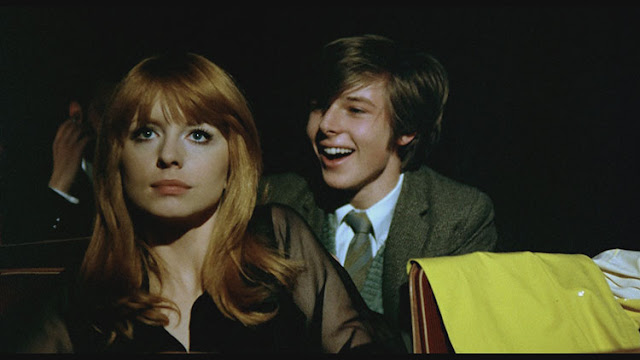
Jerzy Skolimowski’s marvelous and unknown treasure Deep End has enjoyed a cult following ever since its initial release over 40 years ago. The film concerns a 15-year old boy, Mike (John Moulder-Brown), who has just started working in a public bathhouse as an attendant. The only other attendant at the bathhouse is Susan (Jane Asher), a sexy, slightly older girl who Mike falls in love with. Released in 1970, Deep End is an unjustly neglected film that is now beginning to receive the recognition it has long deserved. The film is finally out on DVD and Blu-Ray through BFI, and received repertory screenings in London and New York this year.

A highly influential coming-of-age drama, Deep End also features a cool soundtrack comprised of mostly psychedelic rock that permeated British culture in the late 1960s, mixed with softer music a la Cat Stevens. Reminiscent of the seminal French and Italian new wave pics of the era, Skolimowski’s depiction of adolescent hormones gone wild is tender yet humorous.


The film’s stand out is Asher, that redheaded Beatles-muse that was once engaged to Paul McCartney in the mid-60s. Her character in the film is shallow, yet seductive. And Mike’s naivety falls prey to her fiery ways. He begins to stalk her, and follows her to the movie theater on a date with her fiancé in a particularly humorous sequence, which involves a dozen hot dogs, a cardboard cutout of Asher, an X-rated film called The Science of Sex, and a prostitute with a broken leg. The actors were given freedom to improvise and the results are golden, as the two protagonists, despite a gap in age and personality, enjoy great chemistry together onscreen.

Co-writer and director Skolimowski cut his teeth working on projects with fellow Polish filmmaker Roman Polanski and even shares writing credit on Polanski’s brilliant debut, Knife in the Water from 1962. Skolimowsky followed it up with this British/West German production and continues to make small-market films to this day.


Everything about this quietly ambiguous, yet profound film–-the photography, the imagery, the music--feels vibrant and alive in a way that makes most modern coming-of-age movies look formulaic and of little depth. Four decades after its release, Deep End remains a quirky if disquieting film from the Polish new wave. The tragic ending is one of cinema’s most visually appetizing, and most memorable. And just try not falling in love with Asher after watching the film! She is sublime, and Deep End remains the finest work of her career.

Sunday, December 11, 2011

HOUSE OF PLEASURES (BERTRAND BONELLO, 2011)

House of Pleasures, France, 2011
Dir: Bertrand Bonello
Cast: Alice Barnole, Iliana Zabeth, Jasmine Trinca


2011 saw many independent and foreign films go mostly unnoticed with major audiences. If it was something from overseas or independent, and it wasn’t called The Artist or Beginners (both overrated), then it probably wasn’t going to make it with audiences in American theaters. Instead, moviegoers preferred Transformers 3: Dark of the Moon, and Harry Potter Part 7 Part 2, both of which grossed over $350 million in the US.

Turning the attention away from those blockbusters and sure-to-win-come-awards-time films, it is worthy to note a little-known French film by veteran Bertrand Bonello.

Bonello’s fifth feature-length film, House of Pleasures, is that rare type of film--both shocking and disturbing to the eye, yet provocative and intriguing enough to captivate you. Based on a screenplay written by Bonello himself, House of Pleasures takes place entirely in a Parisian brothel at the turn of the 20th Century. Its inhabitants vary from naïve teenagers who seek independence from their families and girls in their late 20s, already considered old and brittle. Each girl has a sad story to tell, each with enormous debts forced to pay them off by living and working in the house. Life is difficult for the prostitutes. They have no future, no hope. Their debts will never be paid off. Some will catch fatal diseases, which is unavoidable; others suffer a fate far worse--mutilation and lifelong humiliation. A client assaults one girl so badly that she ends up with the nickname “The Woman Who Laughs.”


The movie was immediately written-off by critics after its premiere at the Cannes Film Festival in May. It is difficult for critics to praise the film, since it consciously resists definition and meaning by traditional standards. It is a shame though, because House of Pleasures is worthy of an audience outside of the art house crowd. From the start, the film draws you in with sensuous, ethereal imagery. Helmer Bonello's self-penned score alongside use of playfully old-fashioned soul music and 1960s rock tunes infuse a modern sensibility that keeps the period flavor from becoming overly sentimental.

It should be noted that Bonello never seems to resist alienating his audience, forcing the viewer to squirm in their seat, yet the landscape is so exquisite and stylish that they cannot turn away completely. House of Pleasures, also known as House of Tolerance in the United States, is a brave, titillating and unrelenting work of art. While it may not please a wide range of audiences, the film retains an odd appeal, which might explain its strange effect on the viewer. Bonnello does a great job in creating a beautifully constructed alternative art film. It stands as the one of the finest motion pictures of the year, and certainly the most underrated.

Saturday, December 3, 2011

COMEDY IN DRAMA -- COMEDIANS AND SERIOUS ROLES


I have long had a fascination with comedians in dramatic roles. They are rare but usually brilliant. There is Art Carney who won an Oscar for Harry and Tonto in 1974. Richard Pryor gave a great performance in Paul Schrader’s Blue Collar in 1978. The last 25 years however have brought us some of the best performances from the unlikeliest of actors. In 1984, Bill Murray had already scored hits with Caddyshack and Stripes before exploding with Ghostbusters (and its subsequent sequel released a few years later). But in 1988, Murray decided to star in a black comedy directed by Richard Donner, Scrooged, a variation on Charles Dickens classic tale of A Christmas Carol.

Murray continued making serious efforts at comedy with 1993’s Groundhog Day and 1998’s Rushmore, directed by Wes Anderson. His budding friendship with Anderson led to two other films, 2001’s The Royal Tenenbaums and 2004’s The Life Aquatic with Steve Zissou. Around this time, Murray was courted by Sofia Coppola, cousin of Jason Schwartzman, who co-starred with Murray in Rushmore. At first, Murray declined the role of a jaded celebrity stuck in Tokyo in Coppola’s upcoming Lost in Translation. Eventually however he agreed to star in the film, and won an Academy Award nomination for his performance. He lost to Sean Penn in a controversial Best Actor race. Since then, Murray has starred in several other dramas including Jim Jarmusch’s Coffee and Cigarettes and Broken Flowers.

Other successful comedians in the last two decades have turned to drama after becoming stars in comedy. Jim Carrey won acclaim and two Golden Globes for his performances in The Truman Show and Man on the Moon in the late 90s. He also starred in The Majestic, an underrated 1940s tale directed by The Shawshank Redemption filmmaker Frank Darabont. Carrey also starred in the Oscar-winning Eternal Sunshine of the Spotless Mind, before turning in a poorly received performance in the 2007 thriller The Number 23.


Will Ferrell, who first found fame on Saturday Night Live, and continued his hot streak as America’s favorite comedy star with films like Old School and Elf, experimented with drama in Woody Allen's Melinda and Melinda in 2004 and Marc Forster’s Stranger Than Fiction in 2006. He has since gone back and forth between comedy and drama, making silly comedies like Step Brothers and The Other Guys, and more independent fare like Everything Must Go earlier this year.

Another example of a great comic who has recently starred in dramas is Steve Carell. Carell first found success in 2005 both on TV with The Office and on the big screen with The 40 Year Old Virgin. He also starred in the highly acclaimed and Academy Award winning Little Miss Sunshine, in which he played a gay, suicidal uncle. Most of these actors gave brilliant performances, particularly Murray in Lost in Translation and Carrey in both The Truman Show and Man on the Moon (he portrayed deceased comic Andy Kaufman in the latter). However, the reception to their performances was mixed. Murray is the only one who received so much as an Oscar nod for his work.

There is also Adam Sandler, who was unrecognizable in Paul Thomas Anderson’s Punch Drunk Love in 2002. Sandler was also interesting in Judd Apatow’s Funny People, in which he played a foul-mouthed comedian who learns he has only months to live. It was a shrewd and dark comedy that did not achieve the same reception as Apatow’s previous, more traditional comedies like The 40 Year Old Virgin and Knocked Up. Filmmakers typically known for comedy have also given a try at dramas. In 2005, Woody Allen directed Match Point, a Dostoyevsky-ian thriller set in London. The film was a departure from the romantic comedies that made him famous, but was received well by audiences and critics. He directed another thriller in 2007, Cassandra's Dream, starring Ewan McGregor and Colin Farrell.


Currently, several funnymen are transitioning into drama. Jonah Hill, of Superbad fame, recently starred in Moneyball with Brad Pitt about the Oakland Athletics baseball team of the early 00s. The film was written by Oscar-winners Steven Zailian and Aaron Sorkin and directed by Bennett Miller. And it’s not just the gentlemen who are making waves as comics turned serious actors. Comedienne Monique won praise and an Academy Award for Precious in 2009.

What is it about seeing an actor most associated with films filled with laughter playing a role that fills you with sadness that is so intriguing? Is it because we expect him to make funny faces but instead portrays a thoughtful and solemn character? If that’s the case, then that might be the exact reason why the films receive a lukewarm reception from critics and audiences. No, the real reason the movies don’t receive the proper level of recognition is different. The real reason is that most actors are only adept to one genre throughout their careers. And when Jim Carrey shows his face in a drama, the drama people tune in, and the comedy people tune out.

The only thing is, the comedy people outnumber the drama people five to one in this country, so less people see the dramas. Or, maybe, I’m wrong. Maybe it is just very strange to see an actor who is always funny and making you laugh now try to make you feel something more emotional and complex. Maybe, we as audiences are programmed for certain kind of films and actors. Marlon Brando probably wouldn’t have made a very good comedy actor. So we probably don’t want to see Ace Ventura in a serious film either. Perhaps that is the most perplexing thing of all -- the vast psychology of the average moviegoer.